
Land + Container Home = Instant Equity
Most container home articles talk in hypotheticals. This one doesn’t. Here’s a real project one of our owners just finished: a vacant lot in Florida, one steel container home dropped on it, and a property now worth more than double what went into it. No stick framing, no year-long build schedule, no surprises — just a lot, a factory-built unit, and an appraisal that tells the story.

What Actually Went In, What It’s Worth Now
| Lot value before the build | $36,000 |
| Container home, delivered and set | $100,000 |
| Total in | $136,000 |
| Appraised value after the set | $318,000 |
| Equity created | $182,000 |
A 134% GAIN ON COST IN ONLY 2 YEARS · ONE OWNER, ONE LOT, ONE UNIT
Three Reasons This Isn’t a Fluke
1. Land is the cheap half of the equation
Buildable lots still trade in the $30,000s in plenty of markets — especially outside the densest metro cores. The dirt underneath a house has never been what makes it expensive; it’s the structure on top of it. That’s the piece a container home changes.
2. The unit is built in a factory, not on your site
A steel container home is fabricated indoors, on a fixed price and a fixed schedule, and it’s largely finished — flooring, kitchen, plumbing, electrical — before it ever touches your lot. Weather delays, subcontractor scheduling, and material price swings that stretch a stick-built project to 9–12 months mostly disappear. Set day is measured in hours, not weeks.
3. It appraises like a home, because it’s built like one
This is the part most container home sellers gloss over, and it’s the part that actually matters for equity. A container home only creates value like the one above if it’s on a permanent foundation, built to residential code, and recognized by an appraiser as real square footage — not a shed with plumbing. Getting a container structure to appraise cleanly is genuinely the hard part of this business. It’s also the part we’ve spent years figuring out.
Starter Home or Investment — Same Numbers
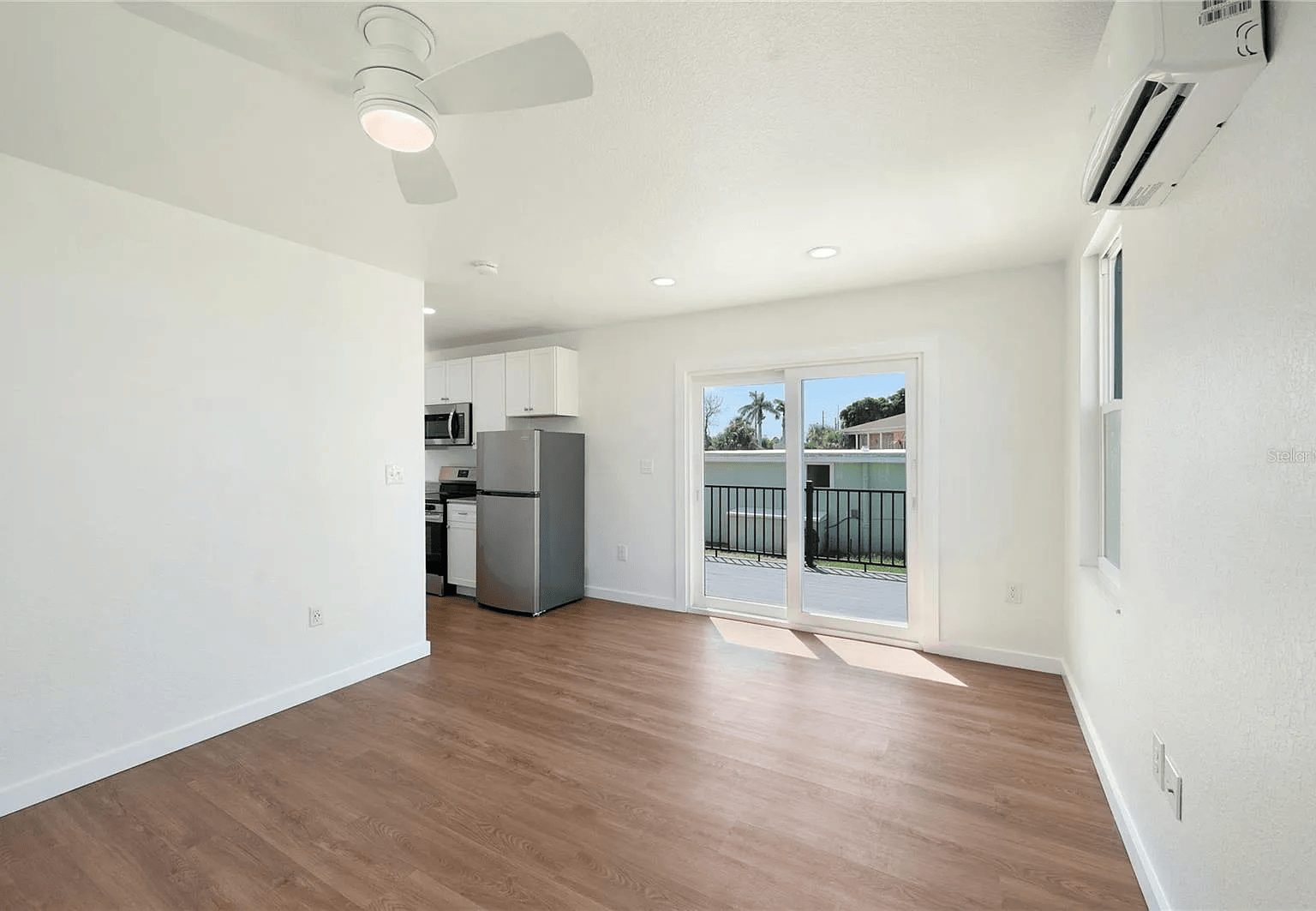
If you’re looking for a starter home: this is a real 2-bedroom, 1-bath, code-built house for a fraction of what a comparable stick-built home costs to build from scratch — with hurricane-rated steel construction as a bonus in coastal markets.
If you’re looking at this as an investment: $182,000 in appraised equity in two years, on a $136,000 total spend, is a return most asset classes can’t touch — and it came from land plus one factory-built unit, not a renovation or a flip.
We Have Inventory Ready to Ship
Finished homes and shells already built and sitting on the yard. The next production run needs the space — send us your lot address and we’ll tell you what it pencils out to.
Frequently Asked Questions
How much does a container home cost to build?
In this case study, the finished 640 sq ft, 2-bedroom, 1-bath unit cost $100,000 delivered and set. Pricing varies by size, finish level, and site conditions — factory-built shells typically cost less per square foot than comparable stick-built construction.
Do container homes appraise the same as traditional homes?
They can, but only when built to residential code on a permanent foundation with standard utilities — the same standard an appraiser applies to any site-built home. A container structure that isn’t permanently affixed or code-compliant will appraise as personal property, not real estate, which is why construction method matters as much as the container itself.
Can you finance a container home?
Financing options exist and vary by lender, project type, and whether the home is classified as real property. We work with lenders familiar with container construction and can walk you through what’s available for your situation.
Is a container home a good investment?
As with any real estate, results depend on location, land value, and market conditions — the $182,000 equity gain in this case study reflects one completed project and isn’t a guarantee of future value. That said, lower build costs combined with land in appreciating markets is the same fundamental math behind most real estate returns.
INDIVIDUAL RESULTS VARY BY MARKET, LAND, AND FINISH LEVEL.